New Diversification Lease for Pastoralists
July 24, 2026
Author name
Proposed Amendments to the Land Administration Act 1997
On 18 November 2021 the Minister for Lands, Tony Buti, announced that the Land Administration Act 1997
(WA) would be amended in 2022 to introduce a new, more flexible form of land tenure for unallocated Crown land and pastoral land known as a ‘diversification lease’.
Currently, the Land Administration Act
only permits pastoral and unallocated Crown land to be used for grazing livestock. Pastoral leases in WA are granted for a period of 50 years with an option to renew, which most pastoralists exercise at the end of the lease period. The proposed ‘diversification lease’ will allow pastoralists to extend their pastoral lease for a further 50 years and use their land for other than pastoral purposes including horticulture and renewable projects such as wind farms and carbon sequestration projects.
The Minister has said that this new ‘diversification lease’ will also open up large areas of land for conservation organisations to preserve or rehabilitate biodivsity or for Native Title holders to undertake economic development activities such as cultural tourism.
Diversification Leases
The diversification lease that has been proposed will not extinguish native title rights and interests where there is native title, nor will it prevent mining and exploration activities from occurring. However, the Minister has indicated that all diversification leases will require the establishment of an Indigenous land Use Agreement with native title holders in the area.
The Northern Territory has been granting diversification leases to pastoralists through the Northern Territory Pastoral Land Act 1992
and the Crown Lands Act 1992
for several years and many pastoralists in the Territory have been able to leverage opportunities in the renewable energy sector and diversify their operational activities.
The Minister believes that the proposed amendments will:
- Offer greater certainty of tenure for pastoralists;
- Provide new large-scale carbon farming opportunities on Crown and pastoral lands;
- Remove red tape to aid in the fight against climate change;
- Facilitate important renewable energy projects in regional WA;
- Unlock economic opportunities for Native Title holders; and
- Be another step closer in WA’s transition to net zero emissions by 2050.
Some farmers and pastoralists have raised concerns about the practicality of the diversification lease and whether the proposed amendments will make much difference to the average pastoralist. Most renewable energy projects are very costly and require investment from external sources in order to be established. Diversification leases may only be a viable option for pastoralists with other interests, whom can gain large investments. However, a diversification lease may be an avenue for pastoralists to establish carbon projects and participate in the Commonwealth’s ERF scheme.
The amendments are still being drafted so the details of the diversification lease will not be known until a Bill is introduced into parliament, scheduled for early 2022.
Until then if you would like further information in relation to how the above matters may affect your business, please contact us on (08) 9321 5451 or by email at office@bailiwicklegal.com.au.
By Matilda Lloyd (Paralegal)
For further information about our legal services, please visit our website: https://www.bailiwicklegal.com.au/
The above information is a summary and overview of the matters discussed. This publication does not constitute legal advice and you should seek legal or other professional advice before acting or relying on any of the content.
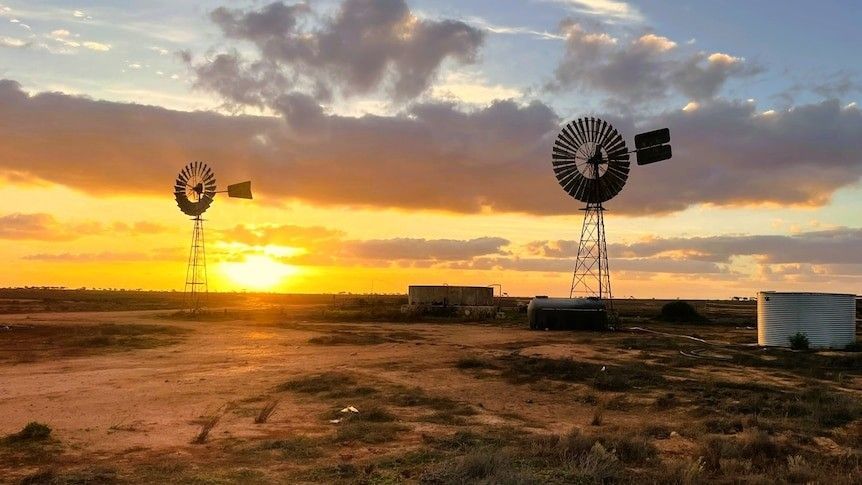
Bailiwick Legal is pleased to have advised Consolidated Pastoral Company (CPC) on its acquisition of Madura Plains Station , one of Australia's largest sheep and wool enterprises. Located on the Nullarbor Plain, Madura Plains spans more than 700,000 hectares and is recognised as one of the country's most significant pastoral properties. The acquisition follows CPC's purchase of neighbouring Rawlinna Station , with Bailiwick Legal also acting for CPC on that transaction. Together, the acquisitions represent a significant investment in Australian agriculture and reinforce CPC's long-term commitment to the sheep and pastoral industries. The sale of Madura Plains involved far more than the transfer of land. Like many large-scale rural transactions, the matter required careful coordination across multiple legal and commercial elements, including property, business assets, contractual arrangements and settlement requirements. Associate Director Matilda Lloyd led the Bailiwick Legal team on the transaction, overseeing all aspects of the matter from contract negotiations through to settlement. "T he sale of Madura Plains Station highlights the complexity and breadth of modern rural transactions. While the transfer of land is often the most visible component, transactions of this scale involve a wide range of legal and commercial considerations that require careful planning and coordination. It was a privilege to support our client, Consolidated Pastoral Company (CPC), through this significant milestone and help deliver a successful outcome. " Matilda Lloyd, Associate Director While transactions of this scale are uncommon, many of the same legal considerations apply to farming businesses across Western Australia. Whether clients are acquiring land, restructuring their business, planning for succession or preparing for sale, early planning and experienced legal advice are essential to achieving successful outcomes. Bailiwick Legal also acknowledges the outstanding contribution of our conveyancer, Tessa Meegan , whose professionalism, attention to detail and commitment throughout the transaction were instrumental in achieving a successful settlement. Significant rural transactions rely on a collaborative team approach, and Tessa's work reflects the high standard of service Bailiwick Legal is proud to provide. With extensive experience acting on complex rural property and agribusiness transactions, Bailiwick Legal continues to support farming families, pastoral businesses and agricultural investors through some of the industry's most significant acquisitions and strategic business decisions. For assistance with all of your agribusiness needs, contact Bailiwick Legal: West Perth Office on 08 9321 5451 or email office@bailiwicklegal.com.au Bridgetwoen Office on 08 6288 6240 or email bridgetown@bailiwicklegal.com.au For further information about our legal services, please visit our website: https://www.bailiwicklegal.com.au The above information is a summary and overview of the matters discussed. This publication does not constitute legal advice and you should seek legal or other professional advice before acting or relying on any of the content.

Bailiwick Legal has been honoured to support Forever Wild over the past few years as they delivered one of the most significant conservation land acquisition programs undertaken in Western Australia. Our team assisted Forever Wild with the strategic purchase of four pastoral stations, Narndee , Boodanoo , Meeline and Challa , transactions that now connect three State Reserves and protect more than 12,000 square kilometres of land. To put that scale into perspective, the combined area is approximately five times the size of the ACT and nearly one-fifth the size of Tasmania . Navigating complexity at scale These were not straightforward property transactions. Each acquisition involved: Multiple pastoral leases Layered regulatory and approval pathways Significant operational and on-ground assets Numerous stakeholders across government, industry and land management Our role was to guide Forever Wild through this complexity with clarity, precision and confidence, ensuring each transaction progressed efficiently while managing risk and safeguarding long-term objectives. “ Forever Wild is creating a world-leading model for nature funding that demonstrates we can manage viable, working pastoral stations whilst also restoring and protecting local ecological flora and fauna, and engaging and supporting Indigenous people and local communities. Complex & challenging, but this initiative could literally change the world .” Jessica Brunner - Director, Bailiwick Legal A growing and evolving legal landscape Large-scale conservation acquisitions sit within an emerging and increasingly complex legal field , intersecting land tenure, pastoral regulation, environmental frameworks and commercial considerations. These matters demand a deep understanding of both the legal mechanics and the practical realities of operating in regional and remote Australia. Our team’s experience in agribusiness, pastoral land transactions and regulatory approvals allowed us to support Forever Wild at every stage, from strategic structuring through to completion. Proud to support leadership in nature finance Forever Wild is widely recognised as an industry leader and a steadfast advocate for nature finance initiatives , helping pave the way for greater accessibility and innovation in conservation funding and land stewardship. We are proud to have contributed our relationships, expertise and practical legal insight to help Forever Wild achieve its vision, and to have played a role, however small, in shaping a groundbreaking future for conservation in Australia. At Bailiwick Legal, we value the opportunity to work alongside organisations that are thinking long-term, acting boldly, and creating outcomes that extend well beyond the transaction itself. For assistance with all of your agribusiness needs, contact Bailiwick Legal on 08 9321 5451 or email office@bailiwicklegal.com.au For further information about our legal services, please visit our website: https://www.bailiwicklegal.com.au The above information is a summary and overview of the matters discussed. This publication does not constitute legal advice and you should seek legal or other professional advice before acting or relying on any of the content.
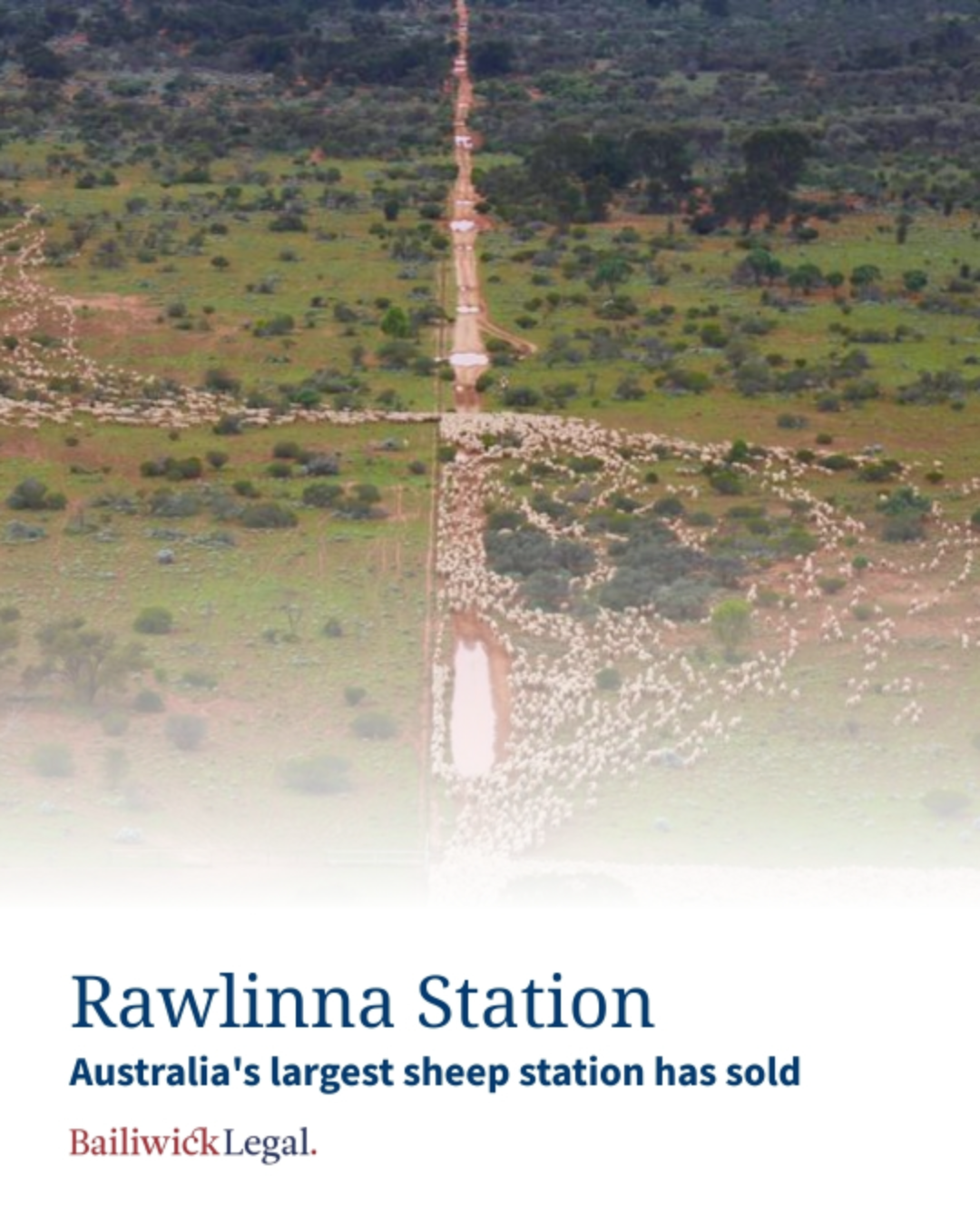
Bailiwick Legal Advises on Landmark Acquisition of Rawlinna Station by Consolidated Pastoral Company
Bailiwick Legal is proud to have acted for Consolidated Pastoral Company (CPC) in its successful acquisition of Rawlinna Station , Australia’s largest sheep station, located on the remote Nullarbor Plain in Western Australia. Spanning over 1 million hectares and running approximately 30,000 sheep , Rawlinna is an iconic pastoral asset with a rich legacy, having been held by the MacLachlan family’s Jumbuck Pastoral Company since its establishment in 1962. The sale marks the first change of ownership in over six decades and was finalised following formal approval from the Western Australian Government for the transfer of the pastoral leases. This transaction involved navigating: The transfer of three separate pastoral leases Coordination across multiple vendor entities Consideration of livestock and operating assets Fulfilment of regulatory and compliance requirements, including WA lease approval processes Bailiwick Legal is a boutique agricultural and regional law firm , proudly based in Perth and Bridgetown, Western Australia. Our role in this acquisition demonstrates that deep sector knowledge, local insight, and personalised legal support are crucial for agribusiness clients managing complex, high-value transactions. Our team, led by our regionally-based solicitor, Matilda Lloyd, provided end-to-end legal and strategic support, including: Due diligence on land tenure and operating assets Contract negotiation and preparation Advice on regulatory approvals and compliance Strategic coordination with CPC’s internal and external stakeholders to ensure a smooth and timely settlement We are honoured to have supported CPC in this milestone acquisition and look forward to watching Rawlinna’s next chapter unfolds. At Bailiwick Legal, we believe that regional expertise, deep industry knowledge, and relationship-based service remain essential to agribusiness success, no matter the scale. Congratulations to all parties involved, including the MacLachlan family, whose stewardship of Rawlinna leaves a lasting legacy in Australian agriculture. – The Bailiwick Legal Team Working alongside agribusinesses to grow, transition, and thrive . For assistance with all of your agribusiness needs, contact Bailiwick Legal on 08 9321 5451 or email office@bailiwicklegal.com.au By Matilda Lloyd (Associate) For further information about our legal services, please visit our website: https://www.bailiwicklegal.com.au The above information is a summary and overview of the matters discussed. This publication does not constitute legal advice and you should seek legal or other professional advice before acting or relying on any of the content.